Why Easy Trail Notes Still Fail After Rain
The printout still said packed earth and family-friendly when we reached the first root section. Overnight rain had turned that sentence into a smear of black soil. The mileage had not changed. The hour had.
The note was honest about distance and silent about the ground
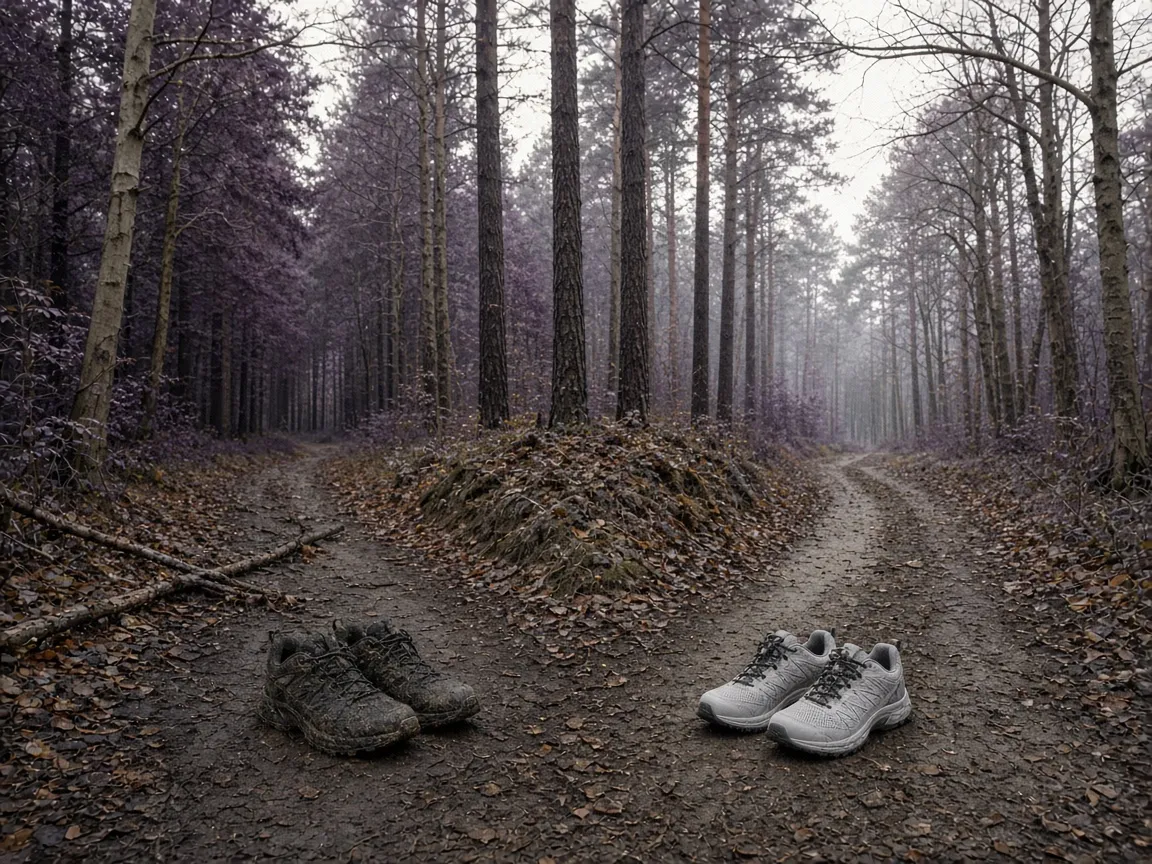
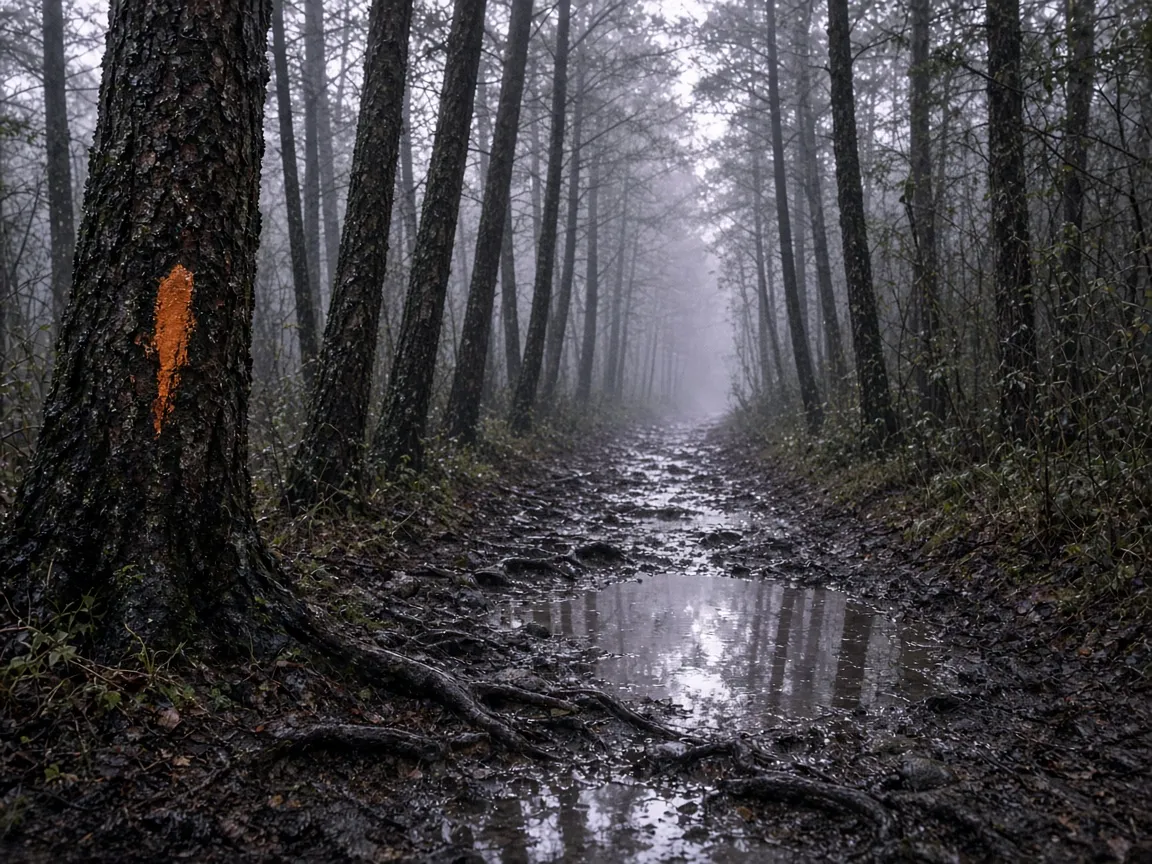
We had the same sheet as everyone else: a short loop, a cheerful adjective, a photograph taken when the tread was pale and dry. The first two hundred steps already showed the lie. Where the photo showed a packed ribbon, we had a paste that held a boot print an inch deep. Each step asked for a tug.
The writer had not cheated. They had walked a different morning. Their “easy” was a surface, not a moral quality of the corridor. Rain does not rewrite the miles. It rewrites the cost of each mile. That is the part a star rating never stores.
Three facts die first, and they do not die together
After a wet night, not every sentence in a trail note ages at the same speed. Distance is stubborn. Praise is cheap. The ground is the first to go. If you only have time to interrogate three lines, make them these.
- Packed mud. A tread that was firm in a dry photo becomes a brake. You spend the extra minutes not on extra miles, but on lifting each shoe. Count that as climb even when the map is flat.
- Paint. Wet bark sheds blazes. A mark that looked loud in a summer report can be a pale flake you walk past while looking at your feet. The junction is still there. The sentence that promised you would see it is not.
- Crossings. Ankle-deep in last season’s picture is a rumor, not a depth. After rain it can be a trench of silt with no obvious far bank. The time you spend hunting for a cleaner place is the time the note never budgeted.
What you can usually ignore, at least until those three are settled:
- How many people “loved it.”
- Whether someone called it perfect for beginners.
- Any photo taken in hard sideways light that makes mud look like dust.
- A list of wildlife that never mentions the tread.
A dry photograph is not a condition report. It is a souvenir that outlived the morning it was taken.
How to read a note when the sky has already done its work
I now read other people’s asides before I read their ratings. The useful sentence often starts with something small: we changed shoes, we ate standing up, we missed the paint and walked an extra spur. Those lines survive weather better than “easy.” They tell you what the writer had to improvise. Improvisation is a weather report in disguise.
Then I look for a date that is not a calendar boast. “After the storm” is more useful than a season name. If the note cannot tell you whether it was written on a dry stretch or a wet one, I write the turnaround earlier than I would like. That is not caution as a personality. That is admitting the paper is missing a column.
There is a cost. You will skip some mornings that would have been fine. A packed-earth loop can dry faster than you think, and you will have turned around on a rumor. That is the trade. The other trade is arriving at the last junction with the light already thin, still believing the printout. I have done both. Only one of them still felt like a walk when we reached the car.
None of this makes rain a villain. Rain is just the most common way an easy sentence gets tested. Wind on an open shoulder, a blown-down tree, a blaze buried in a season of growth — they all do the same job. They ask whether you were reading a description or a wish. After rain the wish is easier to see, because it is stuck to your boots.