When the Written Turnaround Time Arrives
The viewpoint was still a bend away when the circled time came due. The light on the kiosk wood had been kinder when we wrote it. The group wanted one more look. The page did not move.
The hour that only exists if you write it
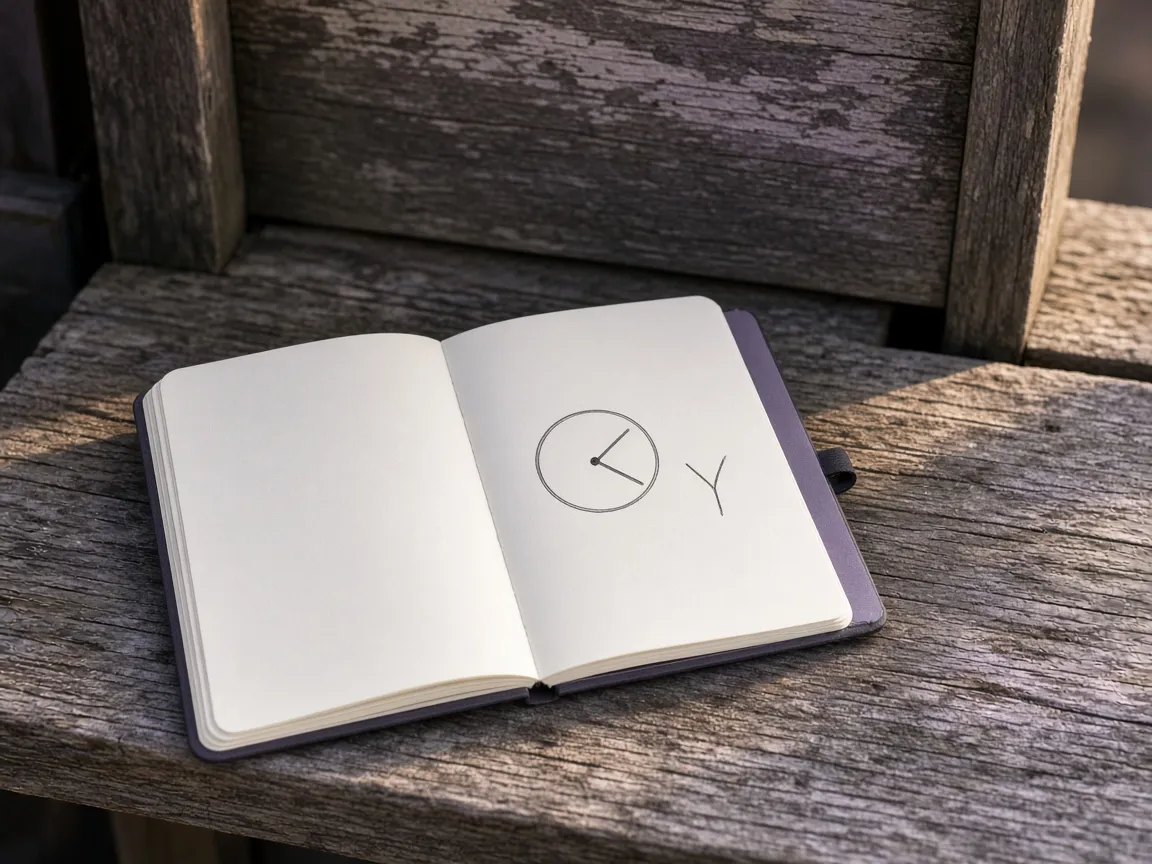
We copied the hour onto the kiosk ledge before the first step. Not a lock screen we would bargain with later. Pencil, circled, sitting next to a sketch of the last junction we were allowed to pass. The act felt theatrical at the car. It was the only thing on the hill that still had a voice.
A turnaround that lives in someone’s head is a mood. A turnaround on paper is a fact you can point at when the mood has changed. Pretty light is a mood. Twenty minutes to a viewpoint is a mood. The return under thinning cover is not a mood. It is a clock problem.
What the written hour is for
If you only remember three jobs for that circled time, make them these. They are jobs, not virtues.
- It is a ceiling, not a suggestion. Arriving at the hour with energy left is the point. Spare energy is not a coupon for one more bend.
- It is counted from the last light you will accept on the return, not from how far you hope to get. Hope does not shorten the walk back.
- It belongs to the slowest person as much as to the person who wrote it. The writer does not get a private extension for being the one with the pencil.
What the hour is not, however tempting:
- A dare to beat so the day feels earned
- A prize for whoever is fittest
- A number you reopen because the photograph would be nicer
- A substitute for looking at the sky as you go
The walk that turns while the viewpoint is still twenty minutes ahead is the walk that still owns the car park.
How the argument actually starts
The argument is never “should we ignore the clock.” It is “the clock was conservative.” Conservative is how people say they want the viewpoint more than they want the return. I have said it. The sentence feels reasonable because the tread is still kind and talking is still easy.
Treat the written hour the way you treat a closed gate. You can dislike it. You cannot pretend it opened because you are enjoying yourself. If the group wants a later time, argue at the kiosk, while everyone can still see the sketch and the circled number. On the path, the page has already spoken.
There is a cost. You will miss some viewpoints. You will walk back past people still going up and feel foolish. That feeling is cheaper than arriving at the last junction with no margin. Foolish in open light is a story you can tell. Late in the trees is a different story.
Copy the hour where you can see it without unlocking anything. A notebook on a strap. A card in the lid. A phone that needs a code becomes a negotiation. The point of writing it was to take negotiation off the hill.